
How Does Landscaping Turn a Pool Into a Complete Backyard Oasis in North Texas?
Landscaping turns a pool into a complete backyard oasis by integrating the pool with shade, privacy, greenery, outdoor living areas, lighting, and surrounding architecture. In North Texas, effective pool landscaping should also account for intense summer heat, periods of drought, clay-heavy soils, drainage, and seasonal temperature changes so the entire backyard remains attractive, comfortable, and manageable year-round.
At Texas Tropic Pools, we believe a custom pool should feel like part of a thoughtfully designed outdoor environment, not an isolated feature in the middle of the yard. The best backyard transformations consider how homeowners will move through the space, where they will relax and entertain, what they will see from inside the home, and how landscaping can complement the pool’s shape and materials. By approaching the backyard as one connected design, homeowners can create a more polished and inviting retreat. For North Texas families, that also means making practical choices for the local climate so the finished space delivers beauty without creating unnecessary maintenance.
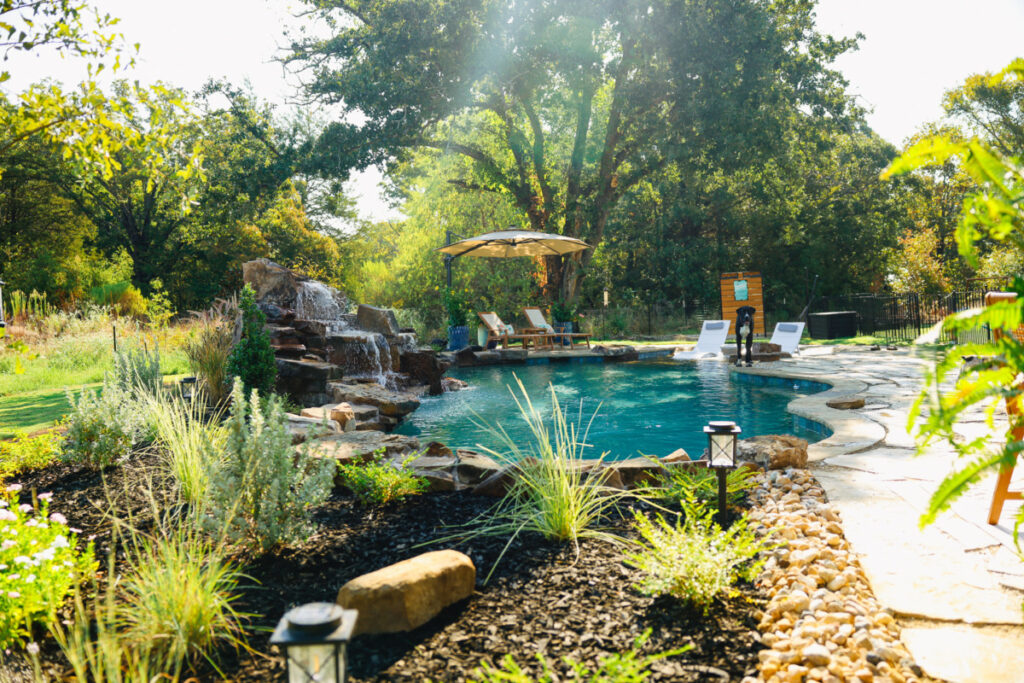
Pool Landscaping Ideas for a Complete North Texas Backyard Retreat
A successful backyard oasis balances pool design, landscaping, shade, privacy, hardscaping, and outdoor living features. Landscaping provides the visual connection between these elements while making the space feel more natural, comfortable, and intentional.
Why Is Landscaping So Important Around a Custom Pool?
Landscaping helps a custom pool feel integrated into the property rather than simply installed in it. Plants, trees, lawn areas, stonework, and garden beds soften hard pool surfaces and establish a visual transition between the home, pool, and rest of the yard.
Thoughtful landscaping can also define how different areas are used. For example, planting beds can separate a quiet lounging area from a more active entertainment space, while trees or tall shrubs can create a sense of enclosure around the pool.
Good pool landscaping can help:
- Create privacy from neighboring properties
- Add shade around seating and gathering areas
- Soften concrete, stone, and other hard surfaces
- Frame attractive views while screening less desirable ones
- Establish distinct areas for dining, swimming, and relaxing
- Tie the pool’s colors and materials into the home’s architecture
- Add texture and seasonal interest throughout the backyard
The result is a backyard that feels designed as a whole, rather than assembled one feature at a time.
What Plants Work Best Around Pools in North Texas?
The best poolside plants for North Texas are generally species that tolerate local heat and weather while fitting the sunlight, soil, water, and maintenance conditions of the specific property. Native and adapted plants can be particularly useful because they are selected for regional growing conditions.
Texas SmartScape, a program supported by North Central Texas governments and regional water districts, recommends plants suited to the area’s soil, climate, and precipitation. Its plant database evaluates options for factors including sunlight and water demand, helping homeowners select plants appropriate for North Central Texas landscapes.
When choosing plants near a pool, homeowners should consider:
- Water requirements: Group plants with similar irrigation needs together.
- Sun exposure: Pool areas often receive strong direct sunlight for much of the day.
- Mature size: Allow enough room so plants do not overwhelm walkways or pool decking as they grow.
- Debris: Consider how much a tree or shrub sheds leaves, flowers, seeds, or fruit near the water.
- Roots: Avoid placing potentially aggressive root systems too close to pool structures and hardscaping.
- Texture and color: Mix heights, foliage shapes, and flowering periods for a layered appearance.
Texas A&M AgriLife Extension also offers resources for native landscaping, xeriscaping, turfgrass, and WaterWise landscape design, reinforcing the value of choosing plants for Texas growing conditions rather than selecting solely for appearance.
How Can Landscaping Make a Pool Area More Comfortable?
Strategic landscaping improves comfort by creating shade, privacy, visual screening, and a more inviting atmosphere around the water. These considerations are especially important during North Texas summers.
Shade can come from properly positioned trees, but homeowners can also combine landscaping with pergolas, covered patios, umbrellas, or other structures. The goal is to create comfortable destinations around the pool so family and guests have places to relax outside the water.
Privacy deserves similar consideration. Layering shrubs, ornamental grasses, small trees, fencing, and architectural elements can provide screening without making the pool area feel boxed in.
The placement of each element matters. A landscape plan should preserve important sightlines from the house to the pool while screening neighboring properties, equipment areas, utilities, or other distractions.
How Do You Design Pool Landscaping for the North Texas Climate?
North Texas pool landscaping should be designed around heat, water efficiency, soil conditions, drainage, and seasonal weather rather than appearance alone. A landscape that looks beautiful at installation but struggles through its first summer will not create a practical long-term retreat.
Water conservation is particularly important. According to the U.S. Environmental Protection Agency’s WaterSense program, outdoor water use accounts for about 30 percent of household water use nationally and can be considerably higher in dry climates. The EPA also reports that replacing a traditional clock-based irrigation controller with a WaterSense-labeled controller can reduce an average home’s irrigation water use by up to 30 percent.
North Texas presents another consideration below the surface. Texas SmartScape notes that clay is the most common soil type across North Texas, although clay, sand, and loam mixtures all occur. Clay soils and low areas can present drainage challenges, making site evaluation especially important before landscape installation.
Practical strategies include choosing regionally appropriate plants, using mulch to help retain soil moisture, grouping plants according to water needs, planning efficient irrigation zones, and addressing drainage before planting.
Should the Pool and Landscaping Be Designed Together?
Whenever possible, the pool and surrounding landscape should be planned as one complete backyard environment. Coordinated planning makes it easier to align elevations, drainage, walkways, planting beds, outdoor living spaces, lighting, and views.
Consider the backyard from several perspectives. What will you see when you step outside the back door? Where will guests naturally gather? Is there an easy route between the house, pool, outdoor kitchen, and seating areas? Where will shade fall in the late afternoon?
Planning these details together can also prevent common problems, such as planting beds that crowd walkways, irrigation spraying onto pool decking, insufficient space for mature plants, or landscaping that interferes with pool equipment access.
For a luxury backyard, the goal is not simply to add more features. It is to make every feature feel as though it belongs exactly where it is.
Frequently Asked Questions About Pool Landscaping in North Texas
What is the best landscaping to put around a pool?
The best pool landscaping combines regionally appropriate plants, shade, privacy screening, attractive hardscaping, and adequate open space for circulation. In North Texas, plant selections should also account for summer heat, soil conditions, irrigation needs, and seasonal temperature changes.
How close should plants be to a swimming pool?
Plant spacing depends on each species’ mature size and root characteristics. Plan according to mature growth rather than nursery size, and leave enough clearance to protect walkways, reduce debris near the water, and preserve access for pool maintenance.
Can a backyard oasis be low maintenance?
Yes. A lower-maintenance backyard oasis can be created with native or adapted plants, efficient irrigation, well-planned hardscaping, mulch, and plant varieties suited to the site’s conditions. Texas SmartScape specifically promotes regional plant selection and water-efficient landscaping practices for North Central Texas.
Should landscaping be planned before building a pool?
Ideally, yes. Planning the pool and landscaping together allows drainage, elevations, planting areas, decking, lighting, shade structures, and outdoor living spaces to work as one cohesive design.
Create a Backyard That Feels Complete
A beautiful swimming pool can transform a property, but thoughtful landscaping is what helps turn that pool into a complete backyard oasis. From shade and privacy to water-conscious plants and carefully planned gathering spaces, every surrounding detail contributes to how the backyard looks, feels, and functions.
Texas Tropic Pools helps North Texas homeowners think beyond the water and envision an outdoor environment designed around the way they want to live.
Ready to create your complete North Texas backyard oasis? Contact Texas Tropic Pools today to start planning your custom outdoor retreat.